FINANCIAL CLARITY FOR INDIA'S GIG ECONOMY

FINANCIAL CLARITY FOR INDIA'S GIG ECONOMY

77 million gig workers in India earn differently every week. Every financial product they're offered was built for someone else.

77 million gig workers in India earn differently every week. Every financial product they're offered was built for someone else.

77 million gig workers in India earn differently every week. Every financial product they're offered was built for someone else.

Role:

Role:

Product Design, UX Research

Product Design,

UX Research

Focus

Focus

Behavioral Design, Underserved Markets

Behavioral Design,

Underserved Markets

Timeline

Timeline

3 Months (Strategic Design Exercise)

3 Months

(Strategic Design Exercise)

01

01

01

Challenge

Challenge

Challenge

A system built for someone else.

Ravi drives for Swiggy in Mumbai. On a good Tuesday he makes ₹1,800. On a slow monsoon Monday, ₹400. His rent is due on the 5th regardless.

Banks require minimum balances he can't always maintain. Budgeting apps ask him to set monthly limits on income that changes daily. Savings products penalise him for withdrawing during a lean week.

The tools aren't broken. They were just never designed for him.

Why Existing Solutions Fail

Why Existing Solutions Fail

Banks demand minimum balances gig workers can't maintain

  • Budgeting apps assume fixed monthly income

  • Savings products penalize withdrawals during lean weeks

  • No tools acknowledge the psychology of irregular cashflow

Banks demand minimum balances gig workers can't maintain

  • Budgeting apps assume fixed monthly income

  • Savings products penalize withdrawals during lean weeks

  • No tools acknowledge the psychology of irregular cashflow

The Regulatory Opportunity

The Regulatory Opportunity

India's Account Aggregator framework (2021) and UPI's success created infrastructure for consent-based financial tools. The FCA's Consumer Duty principles informed our "respectful fintech" approach – transparency over tricks.

India's Account Aggregator framework (2021) and UPI's success created infrastructure for consent-based financial tools. The FCA's Consumer Duty principles informed our "respectful fintech" approach – transparency over tricks.

02

02

02

RESEARCH

RESEARCH

RESEARCH

The Challenge:
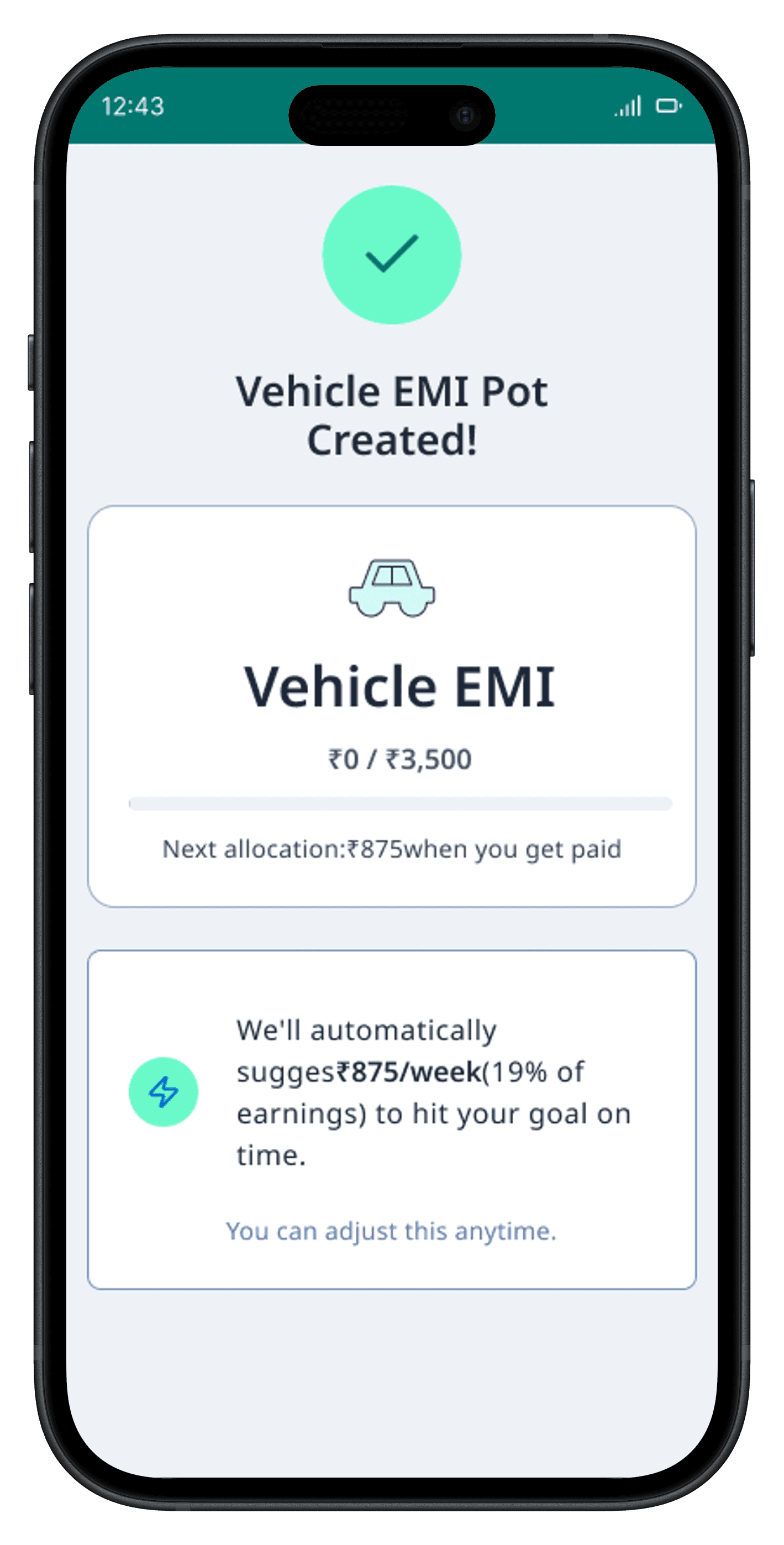
Traditional budgeting assumes monthly income. Gig workers earn daily with 40% week-to-week variation. I needed to design for weekly cash flow without rigid categories.

The Challenge:
Traditional budgeting assumes monthly income. Gig workers earn daily with 40% week-to-week variation. I needed to design for weekly cash flow without rigid categories.

My Research Process:
→ ILO reports on gig economy behaviour
→ Behavioral economics frameworks
→ Competitive analysis (CRED, Jupiter, Fi Money)
→ Regulatory review (Account Aggregator, RBI)

My Research Process:
→ ILO reports on gig economy behaviour
→ Behavioral economics frameworks
→ Competitive analysis (CRED, Jupiter, Fi Money)
→ Regulatory review (Account Aggregator, RBI)

Through my analysis, three critical insights emerged:

Through my analysis, three critical insights emerged:

Insight
01

Insight
01

Users already divide money mentally. Digital tools should mirror this natural behavior, not force percentage-based budgets.

Users already divide money mentally. Digital tools should mirror this natural behavior, not force percentage-based budgets.

Insight
02

Insight
02

Income drops 40% some weeks. Systems must acknowledge reality without judgment.

Income drops 40% some weeks. Systems must acknowledge reality without judgment.

Insight
03

Insight
03

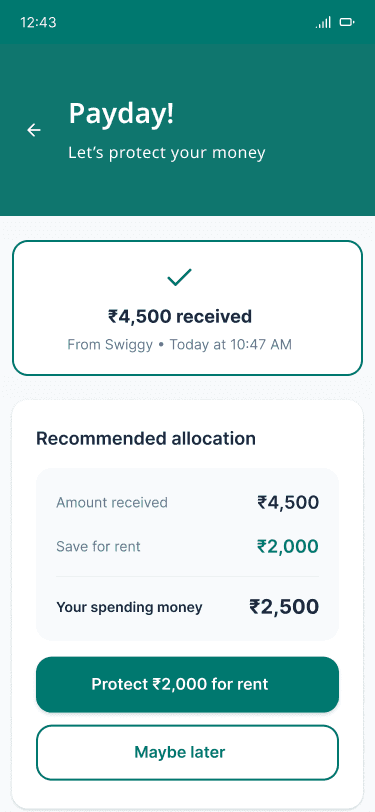
Show the math. "You earned ₹2,400, here's how we suggest dividing it" builds confidence.

Show the math. "You earned ₹2,400, here's how we suggest dividing it" builds confidence.

My Solution

My Solution

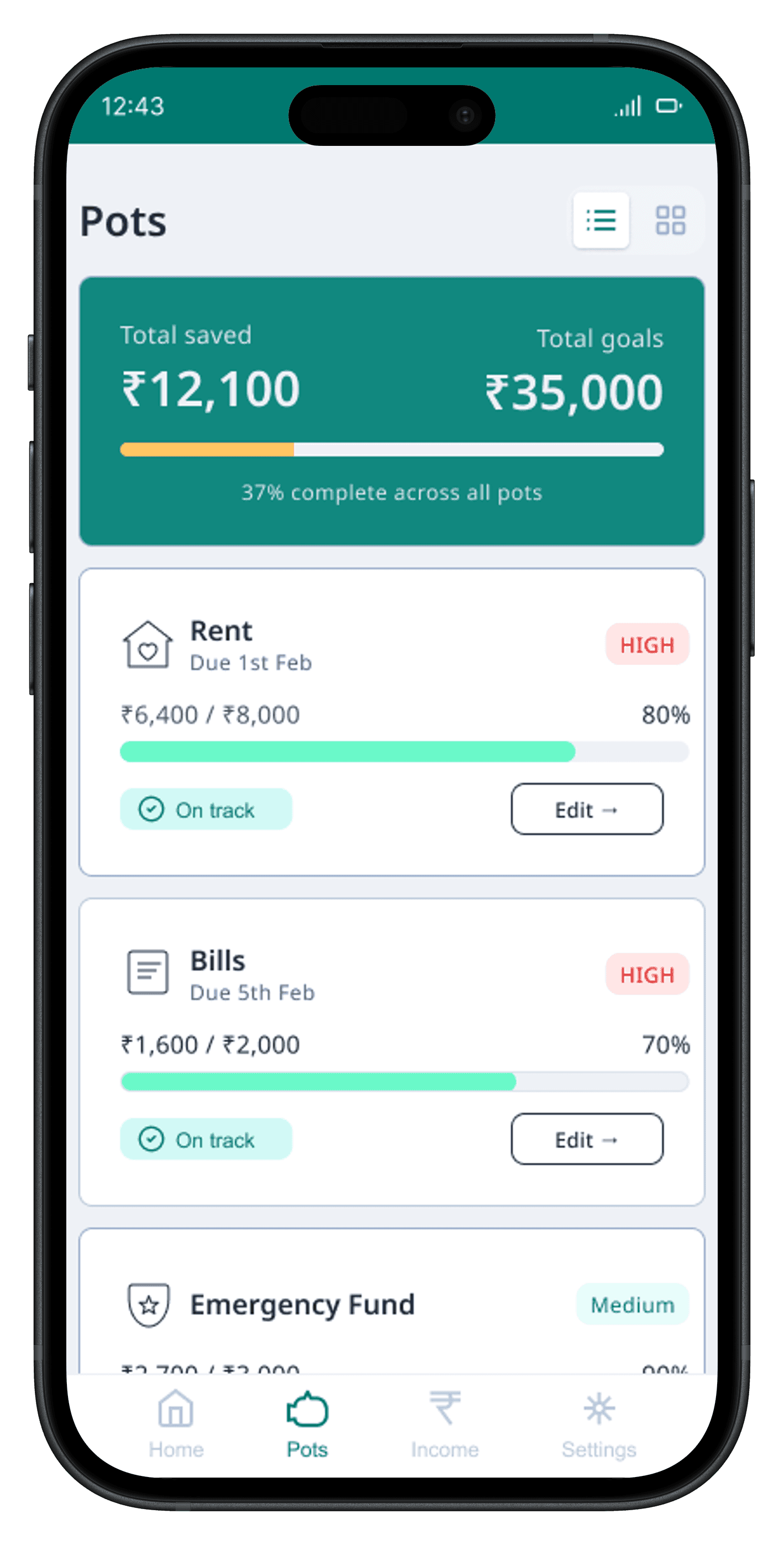
Pot-Based Budgeting
Mirrors natural thinking ("this is rent money")
Adapts to weekly income changes
Transparent and user-controlled

Pot-Based Budgeting
Mirrors natural thinking ("this is rent money")
Adapts to weekly income changes
Transparent and user-controlled

AI Alternatives

AI Alternatives

AI-powered budgeting: Too opaque

Fixed percentage categories: Too rigid

Pot-based system: Flexible and clear

AI-powered budgeting: Too opaque

Fixed percentage categories: Too rigid

Pot-based system: Flexible and clear

03

03

03

Process

Process

Process

I iterated through two major pivots based on user feedback— moving from rigid goals to flexible systems, and from corporate language to conversational tone.

I iterated through two major pivots based on user feedback— moving from rigid goals to flexible systems, and from corporate language to conversational tone.

Initial Direction: Rent-Focused Rigidity
I started with a rent savings feature—a fixed goal with countdown pressure. But my user interviews revealed this created anxiety: "What if I need that money before rent day?" I pivoted to flexible pots without arbitrary deadlines.

Initial Direction: Rent-Focused Rigidity
I started with a rent savings feature—a fixed goal with countdown pressure. But my user interviews revealed this created anxiety: "What if I need that money before rent day?" I pivoted to flexible pots without arbitrary deadlines.

Conversational Tone Without Condescension
I replaced corporate fintech language ("Optimize your allocations") with supportive friend language: "Payday! Let's sort this out." Why it matters: Financial stress is real. Respectful tone without patronizing builds trust with underbanked users.

Conversational Tone Without Condescension
I replaced corporate fintech language ("Optimize your allocations") with supportive friend language: "Payday! Let's sort this out." Why it matters: Financial stress is real. Respectful tone without patronizing builds trust with underbanked users.

User feedback drove both pivots.
Anxiety about rigid deadlines → flexible pots.
Corporate language → conversational tone.

User feedback drove both pivots.
Anxiety about rigid deadlines → flexible pots.
Corporate language → conversational tone.

04

04

04

EXECUTION

EXECUTION

EXECUTION

Visual Design Rooted in User Psychology:

The visual identity needed to feel supportive without being condescending

Visual Design Rooted in User Psychology:

The visual identity needed to feel supportive without being condescending

The brand needed to communicate:

The brand needed to communicate:

"Your money is growing" (teal = financial health, not bank blue)

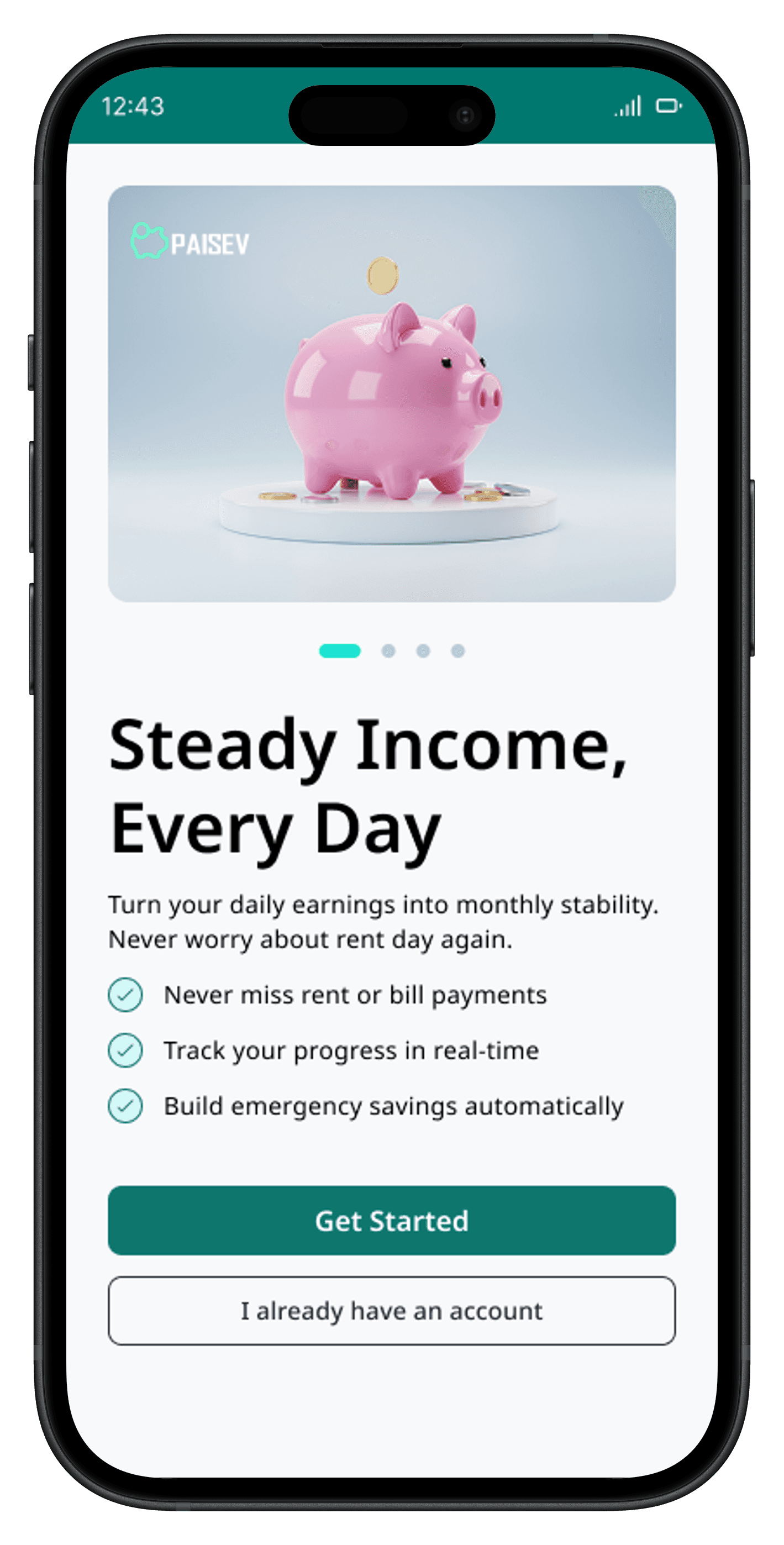
"This is yours" (piggy bank = personal savings, cultural familiarity)

"No judgment" (calm colors, no aggressive CTAs or red warnings)

"Clear, not complicated" (restrained palette, strong hierarchy)
Trust Teal
#0F766E

Ink Blue

#1E293B

#6AF9C9

#FFC563

#66BFFF

#FF8888
Interactive Allocation Interface

Core innovation: drag-to-allocate with live percentage updates. Users see exactly how dividing ₹2,400 affects each pot in real-time. Undo always visible – no commitment anxiety.

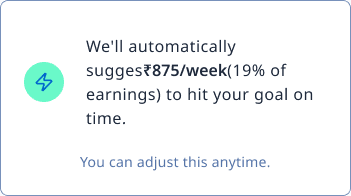
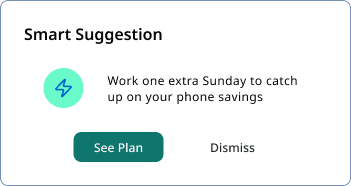
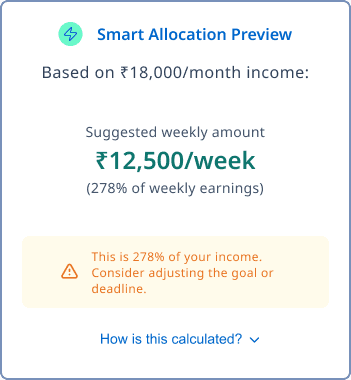
Smart Suggestions That Show Their Work

Smart Suggestions That Show Their Work

Percentages explained, not hidden. User overrides encourage

Pot Management Flexibility

Pot Management Flexibility

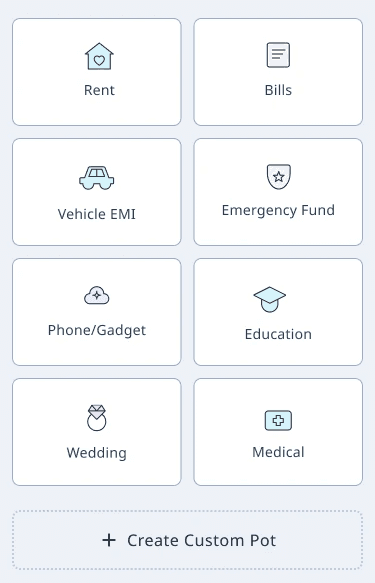
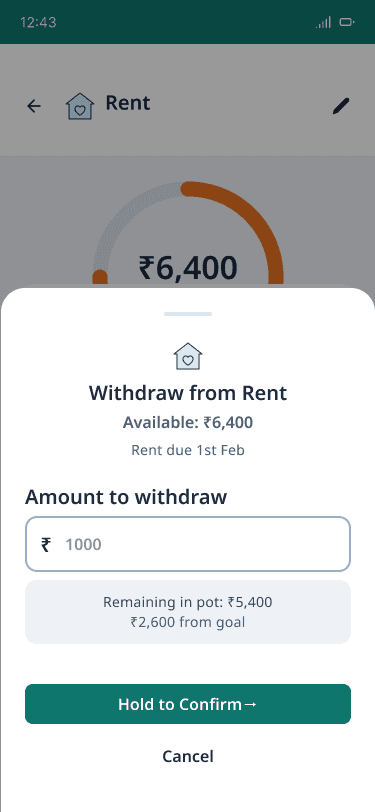
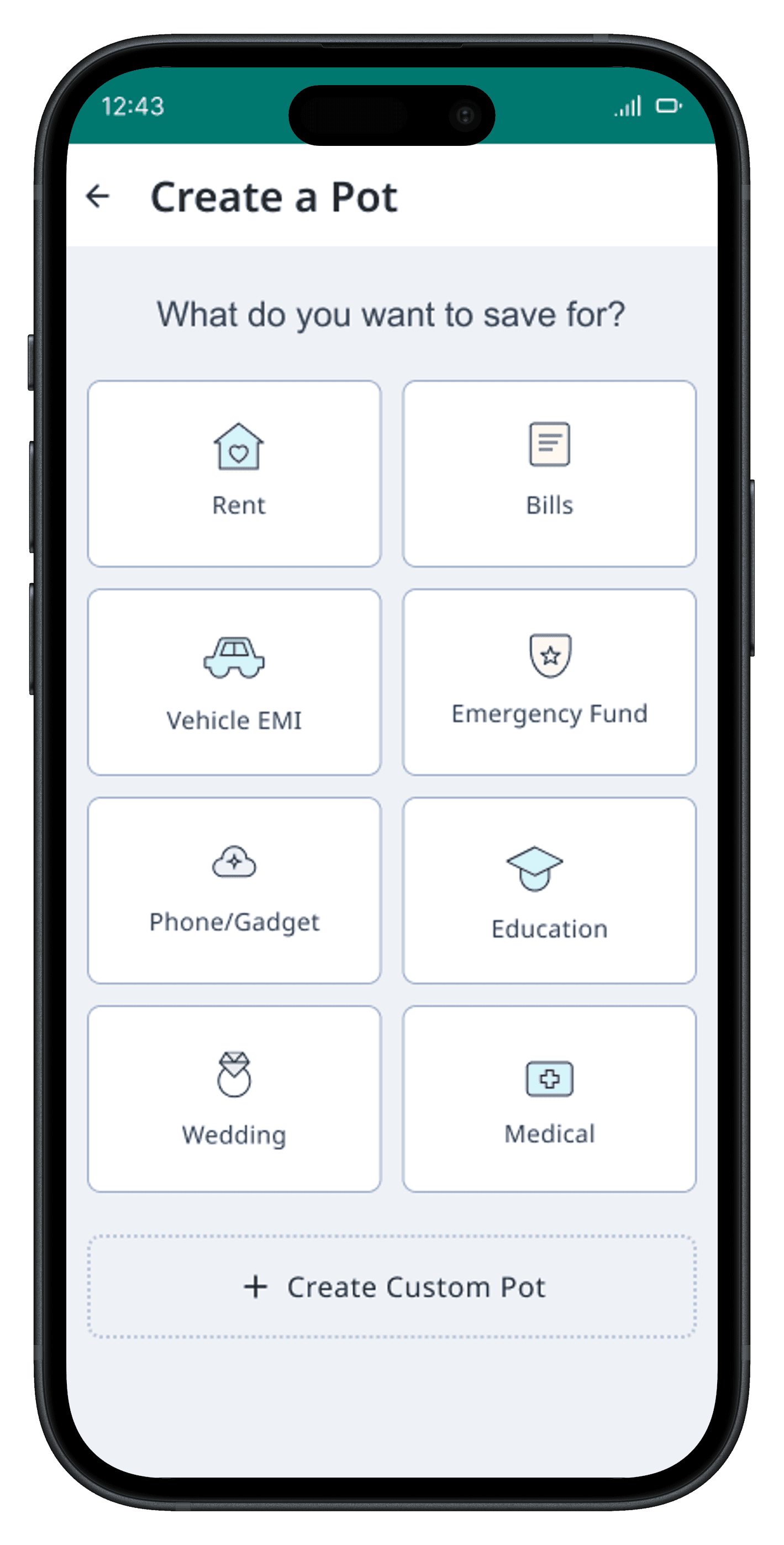
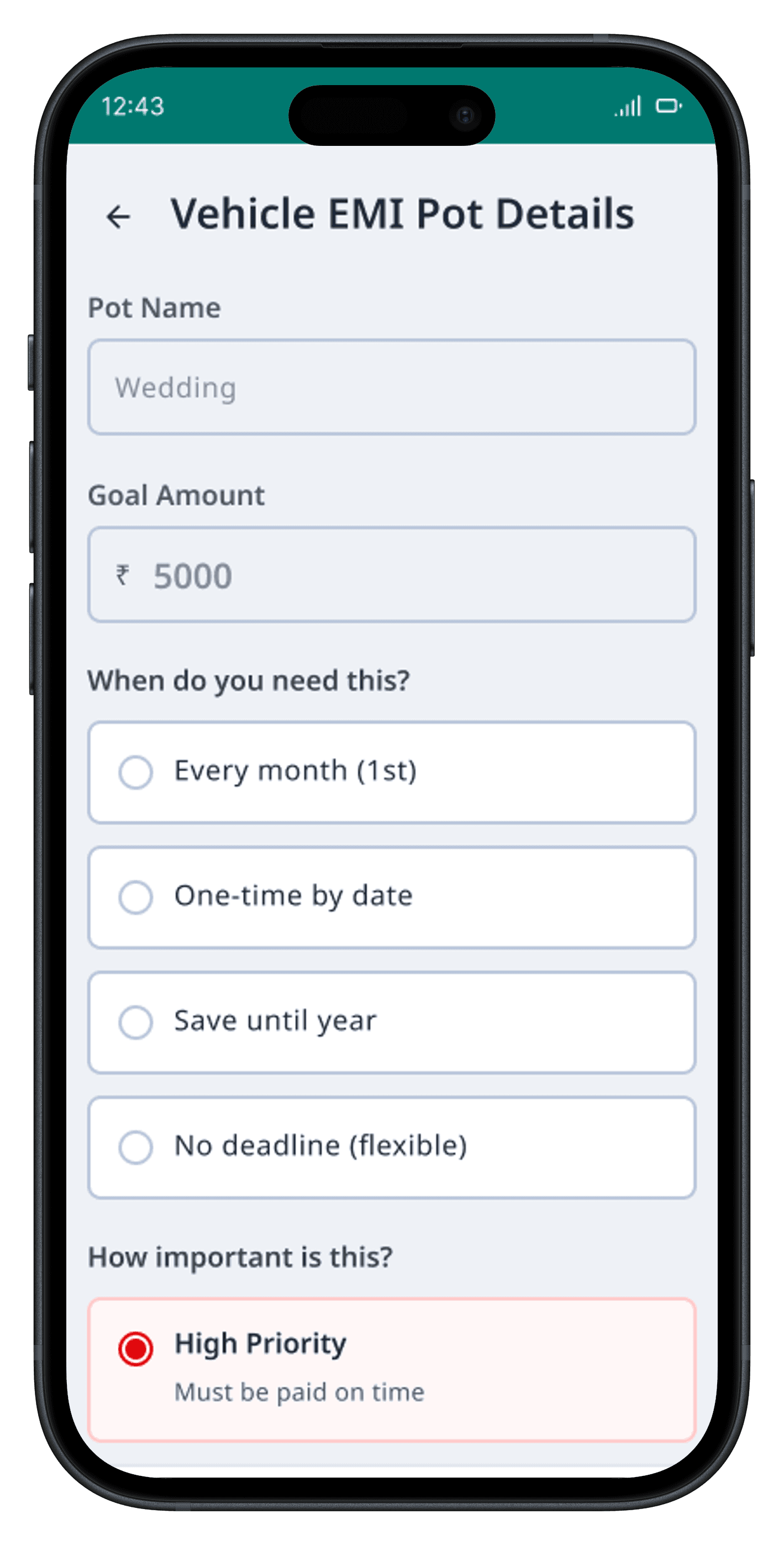
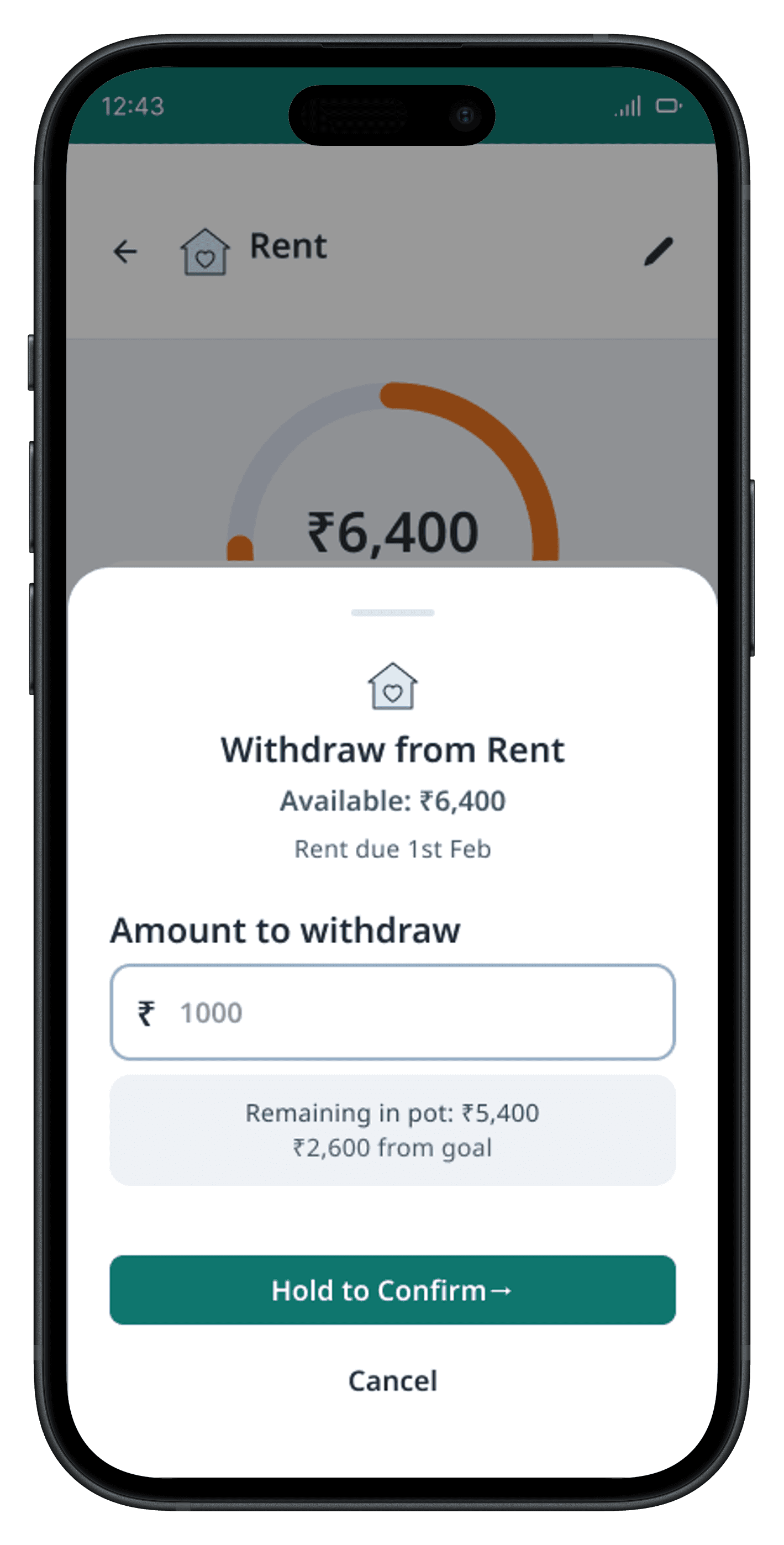
Users create, rename, delete pots without penalties. "Eid Shopping" appears in November, disappears in January. "Bike Repairs" gets activated when needed. No forced categories.

Users create, rename, delete pots without penalties. "Eid Shopping" appears in November, disappears in January. "Bike Repairs" gets activated when needed. No forced categories.

Transaction History Without Judgment

Transaction History Without Judgment

Shows pots used without framing withdrawals as "failures." "Moved ₹300 from Cushion to Must-Haves" is neutral documentation, not a guilt trip.

Shows pots used without framing withdrawals as "failures." "Moved ₹300 from Cushion to Must-Haves" is neutral documentation, not a guilt trip.

05

05

VALIDATION

VALIDATION

My Testing Approach:

My Testing Approach:

I created an interactive Figma prototype with working drag-to-allocate flows and tested it with 8 gig workers recruited through Uber driver forums and delivery platforms.

Participants:

Participants:

→ 3 Uber drivers (2-4 years experience)
→ 3 Swiggy/Zomato delivery riders
→ 2 freelancers (graphic designer, tutor)

Key Findings:

Key Findings:

7/8 preferred flexible pots over fixed monthly budgets
Drag-to-allocate tested faster than dropdown menus
Transparent percentages built more trust than "AI suggestions"
Users loved naming their own pots ("Eid Shopping," "Bike Repairs")

"This is exactly how I think about money in my head. Finally someone gets it."
— Uber driver, 3 years

Validated: Weekly rhythm • User-defined pots • Visible math • Shame-free language
06

06

Reflection

Reflection

What This Solves

Traditional fintech forces gig workers into salaried-employee patterns—minimum balances they can't maintain, monthly budgeting when they earn daily/weekly, penalties for withdrawing during lean weeks. Paisev treats irregular income as the default, not the exception.

What I Learned

→ User research must extend beyond surface questions to behavioural patterns

→ Regulatory frameworks (Account Aggregator) can inspire ethical design

→ Limited color palettes with restraint outperform visual chaos

→ Transparency in algorithms builds trust with underbanked users

If This Were Real

Success Metrics
→ Time to complete first allocation (target: under 2 minutes)
→ Frequency of pot adjustments (high = adapting to real life)
→ % of users who override AI suggestions (transparency working)
→ Retention vs. traditional budgeting apps

Market Opportunity & Impact

Market Opportunity & Impact

Through this project, I identified a massive underserved market:
→ 77M gig workers in India (15% annual growth)
→ Zero products tailored to irregular income
→ 4-6 daily transactions per worker

By respecting how users naturally manage money, I proved we can serve underrepresented markets ethically and profitably.

Business Model Potential:
•Freemium (₹99/month premium)
•Platform partnerships
• Micro-transaction fees

Key Learning:
Financial inclusion isn't just ethical—it's an untapped business opportunity. I can spot underserved markets and design sustainable solutions.


KAEZEE

DESIGNS

Stories

Over

Systems

Made with ❤️in Framer

© Copyright 2025 All Rights Reserved

Stories

Over

Systems

Made with ❤️in Framer

© Copyright 2025 All Rights Reserved

Create a free website with Framer, the website builder loved by startups, designers and agencies.