Turning Math Homework into Mobile Gaming

Turning Math Homework into Mobile Gaming

A puzzle game achieving 38% D7 retention—3x the industry average—by embedding mathematical thinking into addictive puzzle mechanics. Balanced competing stakeholder needs (kids, parents, educators) through invisible education design.

A puzzle game achieving 38% D7 retention—3x the industry average—by embedding mathematical thinking into addictive puzzle mechanics. Balanced competing stakeholder needs (kids, parents, educators) through invisible education design.

A puzzle game achieving 38% D7 retention—3x the industry average—by embedding mathematical thinking into addictive puzzle mechanics. Balanced competing stakeholder needs (kids, parents, educators) through invisible education design.

My Role:

My Role:

Product Designer

Focus

Focus

Retention Design, Multi-stakeholder Products

Timeline

Timeline

6 Months+

01

01

CHALLENGE

CHALLENGE

The traditional approach to Math Education Apps was missing something crucial - the pure joy of play.

Educational math apps average just 12% weekly retention while puzzle games like Candy Crush hit 60-70%. Kids abandon "learning" apps but can't stop playing games—despite using the same mechanics.

Educational math apps average just 12% weekly retention while puzzle games like Candy Crush hit 60-70%. Kids abandon "learning" apps but can't stop playing games—despite using the same mechanics.

How can we make educational games as fun as puzzle games?

How can we make educational games as fun as puzzle games?

50

40

30

20

10

0

Day 7 Retention

Educational

Maths App

Casual

Puzzle Game

50

40

30

20

10

0

Day 7 Retention

Educational

Maths App

Casual

Puzzle Game

02

02

RESEARCH

RESEARCH

4 Weeks Of Research

4 Weeks Of Research

"I like games that make me think, not just memorize. Like Chess, but for math."
— Arjun, age 12

"I like games that make me think, not just memorize. Like Chess, but for math."
— Arjun, age 12

24

User Interviews 60-min sessions

185

Responses Target demographics

15

Apps analyzed educational + puzzles

Competitive teardown: Khan Academy Kids, Prodigy, Monument Valley, revealed the engagement gap.

Competitive teardown: Khan Academy Kids, Prodigy, Monument Valley, revealed the engagement gap.

Four main user segments finalized

Students (8-12 years)

•Craves instant Rewards & Feedbacks

• Enjoys competitions

•Gets bored of lengthy explanations

Math Enthusiasts

• Sought intellectual challenges

• Appreciated elegant problem-solving

• Wanted social sharing features

Educators

• Aligned with learning goals

• Needed tools to track student progres

• Preferred adjustable difficulty options

Casual Gamers

• Expected polished game mechanics

• Wanted quick play sessions

• Prioritized entertainment

03

03

INSIGHTS

INSIGHTS

"Children responded best to achievements broken into micro-goals rather than distant objectives. These insights became our design filter—every feature had to pass all 4 principles."

"Children responded best to achievements broken into micro-goals rather than distant objectives. These insights became our design filter—every feature had to pass all 4 principles."

Principle 1:

Fun First, Learning Hidden

No "lessons," No math terminology—just pure puzzle gameplay where math happens invisibly.

Principle 1:

Fun First, Learning Hidden

No "lessons," No math terminology—just pure puzzle gameplay where math happens invisibly.

Principle 2:

Instant Feedback

Every action gets immediate visual, audio, and haptic response within 0.5 seconds.

Principle 2:

Instant Feedback

Every action gets immediate visual, audio, and haptic response within 0.5 seconds.

Principle 3:

No Tutorials

The game teaches itself—players start playing within 30 seconds of opening the app.

Principle 3:

No Tutorials

The game teaches itself—players start playing within 30 seconds of opening the app.

Principle 4:

Approachable Mastery

Easy enough for quick 5-minute sessions, deep enough for endless mastery.

Principle 4:

Approachable Mastery

Easy enough for quick 5-minute sessions, deep enough for endless mastery.

04

04

SOLUTION

SOLUTION

After prototyping 5 mechanics (tap-match, drag-drop, gesture combos), swipe-to-merge won for requiring minimal cognitive load while maintaining strategic depth.

After prototyping 5 mechanics (tap-match, drag-drop, gesture combos), swipe-to-merge won for requiring minimal cognitive load while maintaining strategic depth.

Meet Numzy

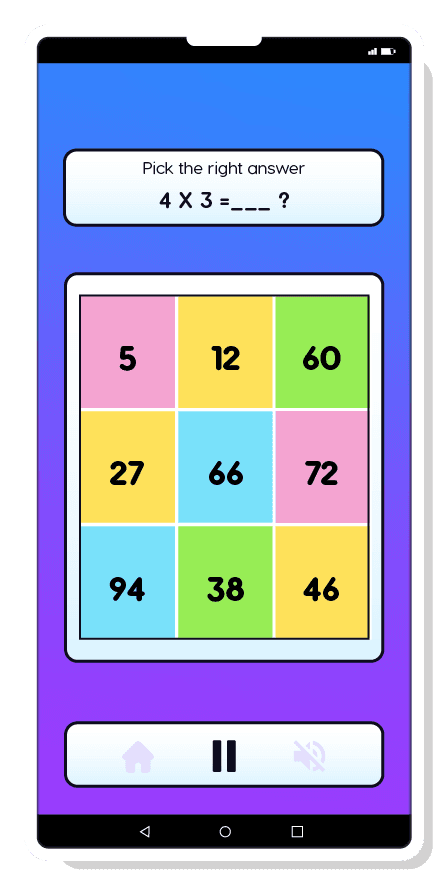
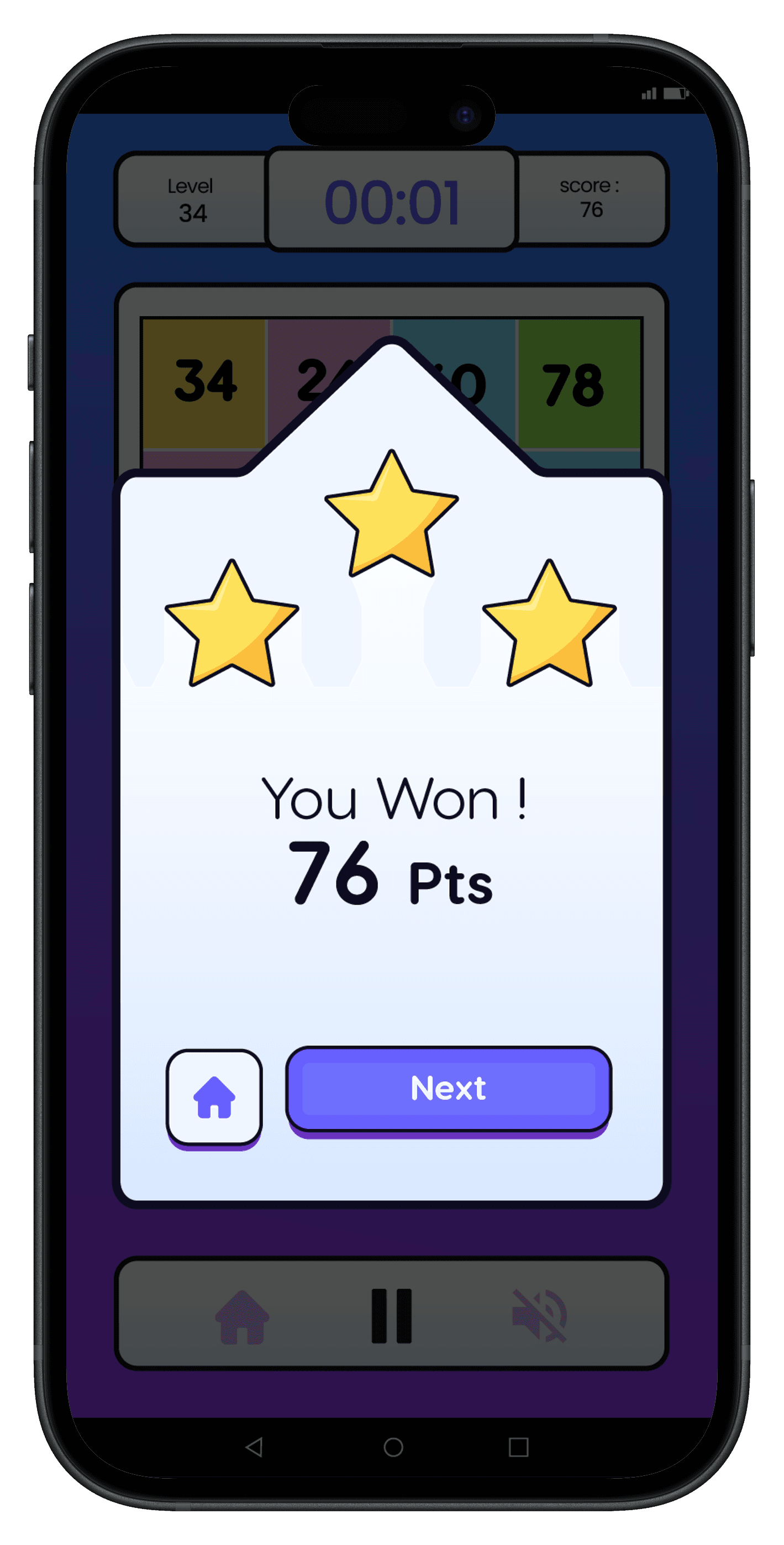
A fast-paced puzzle game where players swipe to merge numbered tiles. Mathematical thinking emerges naturally—kids build number sense without realizing they're learning.

A fast-paced puzzle game where players swipe to merge numbered tiles. Mathematical thinking emerges naturally—kids build number sense without realizing they're learning.

The Magic:
By Level 12, players notice they're creating sequences like 2→4→8→16.
They've been doing exponential math the whole time without knowing it.

The Magic:
By Level 12, players notice they're creating sequences like 2→4→8→16.
They've been doing exponential math the whole time without knowing it.

Vibrant colors (pink, blue, yellow, green) against deep purple background create instant visual clarity

Vibrant colors (pink, blue, yellow, green) against deep purple background create instant visual clarity

Vibrant colors (pink, blue, yellow, green) against deep purple background create instant visual clarity

Test out the Game Mechanics

Test out the Game Mechanics

05

05

Iteration

Iteration

18 students (ages 8-14) tested across 3 iterations.

Before

Hex Grid:

  • 42% completion rate

  • Users confused about tile movement

  • "It feels random" — Omar, age 11

After
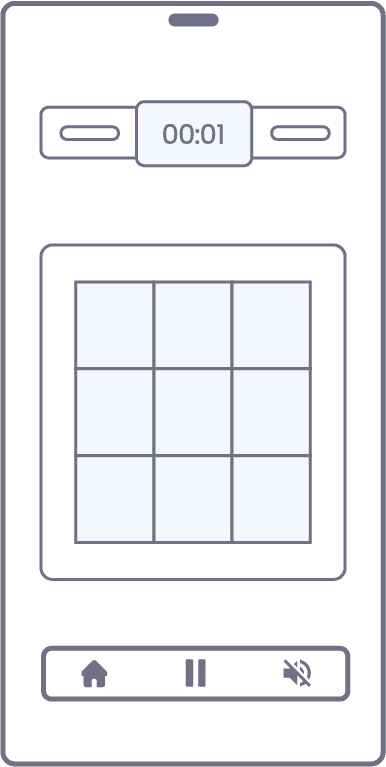
Square Grid:

  • 90% completion rate

  • Intuitive, familiar pattern

  • "Oh, I get it!" — First-time player
The Lesson: Usability beats novelty. We invested the "uniqueness" budget into animation polish instead.

The Lesson: Usability beats novelty. We invested the "uniqueness" budget into animation polish instead.

Other Design Pivots:

→ Tutorial: 5 steps → 0 steps (self-teaching UI)

→ Difficulty: Fixed levels → adaptive based on completion speed

→ Performance: Reduced transitions, invested in merge particles

06

06

IMPACT

IMPACT

Results After Launch

Results After Launch

74%

D1 Retention Target: >70%

38%

D7 Retention 3x industry average

4.7★

App Store Rating 200 families tested

78%

Daily Return 30+ days sustained

Learning Impact:

85% of students showed improved mental math speed - Teachers reported measurable gains in pilot programs

Learning Impact:

85% of students showed improved mental math speed - Teachers reported measurable gains in pilot programs

User feedback
"My kid plays for hours without realizing he's practicing math!"
Parent , Beta testing

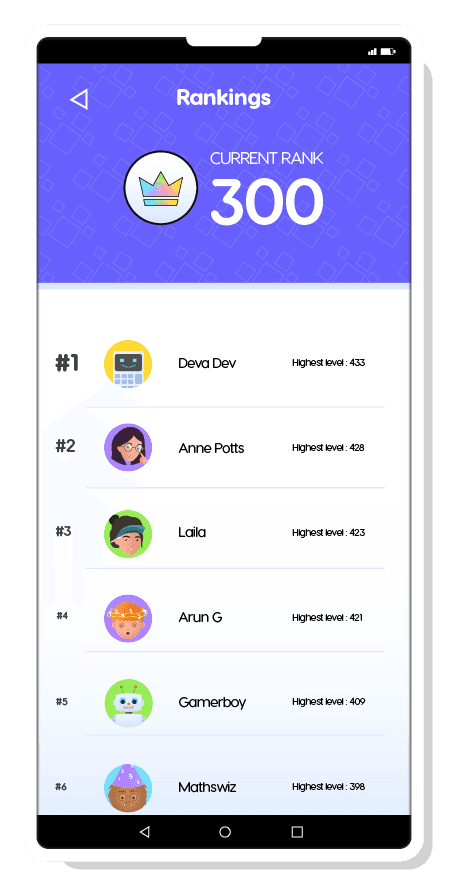
Numzy Kids—a timer-free, leaderboard-free version for younger learners (ages 5-8) focused purely on foundational number sense without competitive pressure.

Numzy Kids—a timer-free, leaderboard-free version for younger learners (ages 5-8) focused purely on foundational number sense without competitive pressure.

KAEZEE

DESIGNS

Stories

Over

Systems

Made with ❤️in Framer

© Copyright 2025 All Rights Reserved

Stories

Over

Systems

Made with ❤️in Framer

© Copyright 2025 All Rights Reserved

Create a free website with Framer, the website builder loved by startups, designers and agencies.